

Three letters can change where you live for the next decade. SIL. SDA. ILO.
Most Sydney NDIS participants have heard at least one of them. Far fewer know what separates them and that gap costs people dearly. The wrong housing support doesn’t just feel uncomfortable; it can mean funding that doesn’t stretch, living arrangements that don’t fit, and goals that never get off the ground.
Here’s the breakdown every participant and carer in Greater Sydney needs before their next plan review.
What Is NDIS Home and Living Support?
Before diving into each option, it helps to understand the key principle: the NDIS separates housing from support.
- The bricks and mortar — where you live — is one question
- The people and services that help you live there — is a different question entirely
SIL, SDA and ILO each address a different part of that equation. Some participants access only one. Many access a combination.
SIL — Supported Independent Living
In plain English: SIL funds the support you receive at home, not the home itself.
SIL is the most common NDIS home and living support. It provides daily assistance from support workers so that participants can manage everyday life as independently as possible. This includes:
- Personal care (showering, dressing, medication management)
- Household tasks (cooking, cleaning, laundry)
- Skill-building for greater independence
- Overnight or 24/7 supervision where needed
SIL is typically delivered in shared accommodation, a small group of participants living together with staff rostered across shifts. It can also be arranged for individual settings in some circumstances. Crucially, SIL does not cover rent, utilities or food; it covers the support worker hours.
Who is SIL right for? SIL suits participants who need high levels of daily support and benefit from a structured, supervised living environment. It works well for people who need someone present throughout most of the day and night.
Sydney scenario — Western Sydney: Ahmed lives in a shared SIL house in Blacktown with two other NDIS participants. Support workers help him with morning routines, meals and appointments. The arrangement gives him daily structure, safety and a growing set of independent living skills — while keeping him connected to his local community. ADCS operates SIL accommodation across Greater Sydney, including purpose-built homes in suburbs like Whalan and West Pymble.
SDA — Specialist Disability Accommodation
In plain English: SDA funds the home itself — purpose-built or significantly modified housing for people with very high or complex physical support needs.
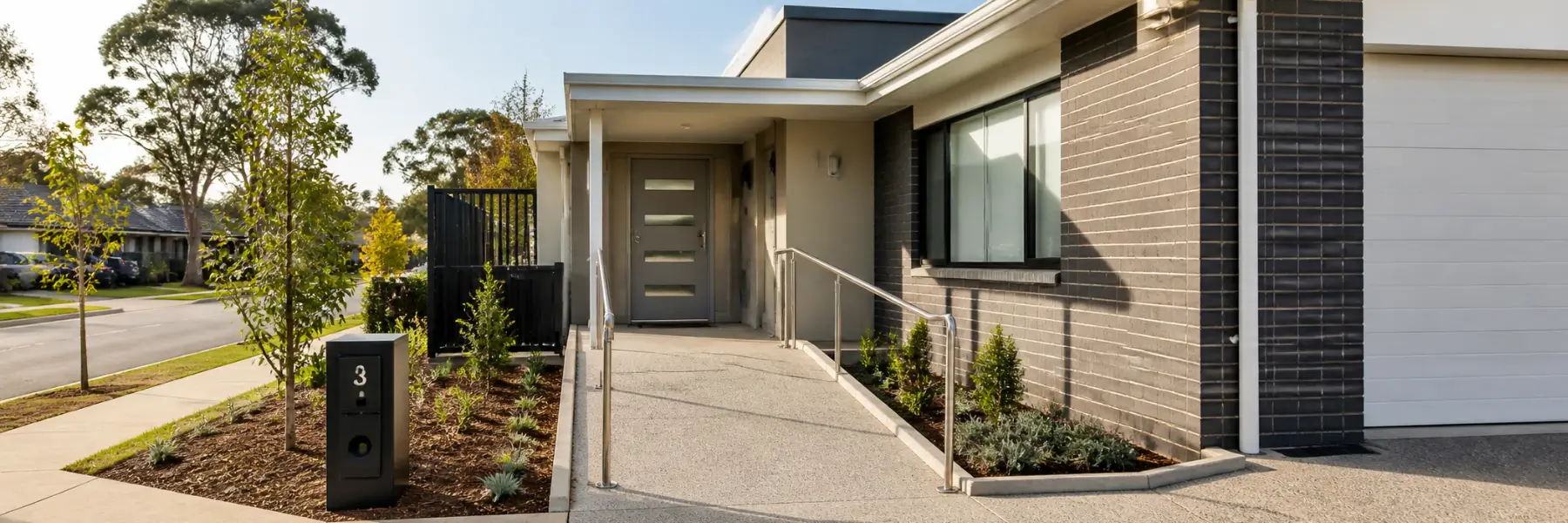
SDA housing is specifically designed with features that make independent living possible for people whose disability would otherwise make mainstream housing unworkable. Features can include:
- Reinforced flooring and ceiling hoists for manual handling
- Automatic doors and fully accessible bathrooms
- On-site emergency call systems
- Robust construction for participants with complex behavioural needs
The critical point: SDA funds the building. It does not fund the support delivered inside it. Almost all SDA residents also receive SIL or another support type. The two work together.
SDA is not available to most NDIS participants — only around 6% of NDIS participants meet the eligibility criteria, which requires extreme functional impairment or very high support needs (NDIS Quarterly Report). Nationally, more than 19,000 participants now live in SDA, and that number is growing (NDIS, 2024).
Who is SDA right for? SDA suits participants whose physical or behavioural disability means that standard housing — even with modifications — cannot safely support them. Evidence of need from an occupational therapist or allied health professional is essential.
Sydney scenario — Inner West: Priya has a high-level spinal cord injury and uses a power wheelchair full-time. She was assessed as eligible for SDA and moved into a purpose-built apartment in Marrickville with ceiling tracking hoists, an accessible kitchen and a live-in emergency call system. She receives SIL support within that home. The combination means she lives independently and safely in a vibrant inner-city neighbourhood. You can explore ADCS’s range of disability accommodation options in Sydney here.
ILO — Individualised Living Options
In plain English: ILO funds a personalised living arrangement designed around your preferences, relationships and goals — rather than fitting you into an existing model.
ILO is the most flexible of the three options. Instead of moving into a shared group home or applying for specialist housing, participants work with a provider to design an arrangement that genuinely suits their life. Common ILO models include:
- Living alone with scheduled drop-in support from workers
- Sharing a home with a trusted friend, family member or co-resident who provides informal support
- A host arrangement — living with a host family who provides day-to-day assistance
- A combination of formal and informal support tailored to your routine
ILO funding usually rolls out in two stages: a design phase (exploring options, assessing what would work) followed by the implementation phase (putting the arrangement into practice).
Who is ILO right for? ILO suits participants who do not need 24/7 support, have existing relationships or community connections they want to build their living arrangement around, and want genuine choice and control over how their day-to-day life is structured.
Sydney scenario — Parramatta: James is a 28-year-old participant with an intellectual disability who wants to live closer to his sister in Parramatta. Rather than moving into shared SIL accommodation, he used ILO funding to design an arrangement where he rents a unit near his sister, who provides informal daily check-ins, supplemented by a support worker two mornings a week. ADCS’s ILO service page outlines how this type of personalised planning is supported.
Side-by-Side Comparison
| SIL | SDA | ILO | |
| What it funds | Daily support (people) | Physical housing (building) | Personalised living arrangement design |
| Who it suits | High daily support needs | Very high/complex needs requiring specialist home | Those wanting flexible, self-directed living |
| Eligibility bar | Moderate–high | Very high (approx. 6% of participants) | Moderate |
| Typical setting | Shared or individual home | Purpose-built specialist dwelling | Own home, host, or co-resident |
| Includes housing? | No | Yes | No (but shapes how you live) |
| Includes support? | Yes | No (separate SIL/other needed) | Yes (formally and informally) |
| Time-limited? | No — ongoing | No — ongoing | Design phase is time-limited; arrangement ongoing |
How to Request Each Option in Your NDIS Plan
Regardless of which option you are pursuing, the process follows a similar path:
- Clarify your housing goal — Write a specific goal in your NDIS plan about where and how you want to live (e.g., “I want to live in my own home in Western Sydney with scheduled daily support.”)
- Get a functional assessment — An occupational therapist or allied health professional documents your support needs and why a particular housing model is appropriate.
- Work with your Support Coordinator — For SIL, your coordinator helps arrange a Roster of Care (RoC) and provider quote. For SDA, they submit a housing needs assessment. For ILO, they manage the exploration and design phase.
- Submit to the NDIA — Your planner reviews the evidence and determines whether the support is reasonable and necessary under your plan.
- Explore while you wait — Short-Term Accommodation (STA) or Medium-Term Accommodation (MTA) can provide a bridge while longer-term arrangements are confirmed.
For a practical breakdown of how SIL, ILO and STA differ at the operational level, the ADCS blog 3 Key Differences Between ILO, STA and Medium Support in SIL Accommodation is a useful companion resource.
What’s Changing in Greater Sydney Right Now
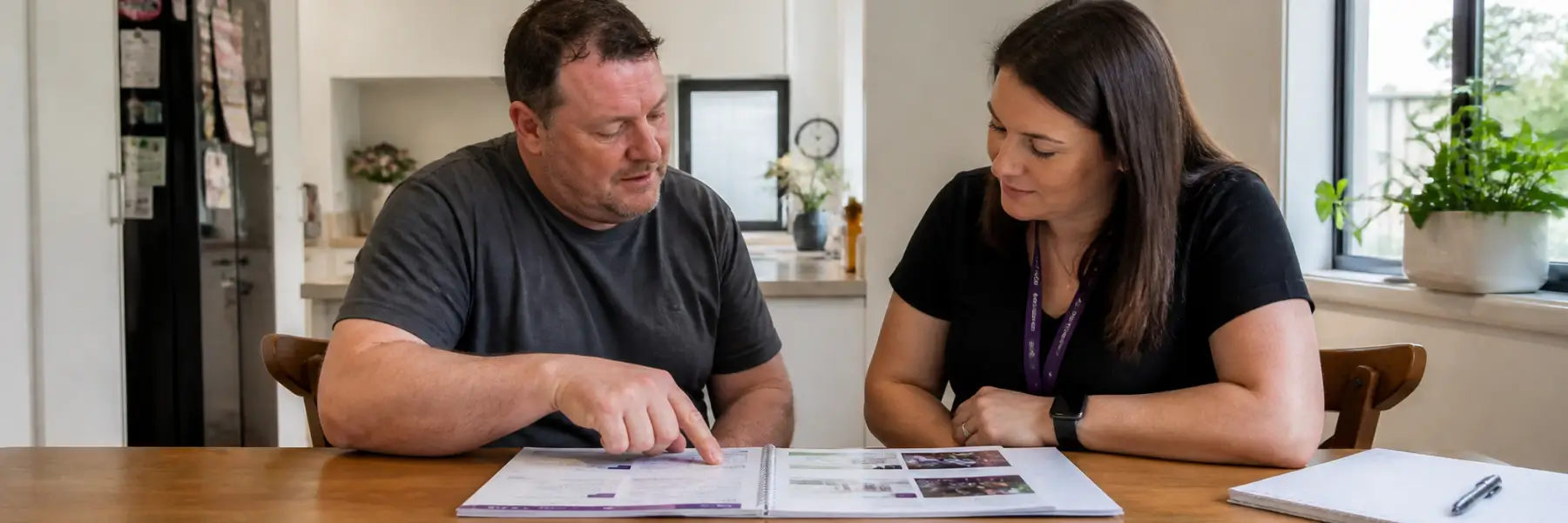
The Greater Sydney NDIS market is evolving rapidly in 2026. A few trends worth knowing:
- SDA supply is growing in Western Sydney corridors, particularly around Blacktown, Penrith and Campbelltown, where new purpose-built dwellings are addressing longstanding waitlists
- ILO uptake is increasing as more participants — and their planners — become familiar with the option and its flexibility
- Legislative changes that took effect from October 2024 are still rolling out, with the NDIA placing greater emphasis on matching support to individual goals rather than defaulting to group living arrangements
- The NDIS Quality and Safeguards Commission is developing updated Practice Standards for SIL, with stronger oversight of safety and workforce capability in shared settings
If you are approaching a plan review in NSW and have housing goals, now is an excellent time to ensure your plan clearly reflects them.
For a deeper look at what SIL funding means in practice, the ADCS guide Your 2025 Guide to NDIS SIL Housing walks through the process from assessment to move-in.
Not Sure Which Option Suits You?
That is completely normal. Many participants sit at the intersection of two options — or are not yet sure whether SIL, SDA or ILO best matches their goals, relationships and disability support needs.
The ADCS team works with participants and families across Greater Sydney to navigate exactly this question. Whether you are exploring options for the first time or preparing for a plan review, we offer a free, no-obligation consultation to help you understand which home and living supports fit your situation.
Frequently Asked Question
Q1: What is the main difference between SIL and SDA under the NDIS?
SIL funds the daily support you receive at home — the people who assist you. SDA funds the physical housing itself. Many participants with high support needs receive both: SDA for the building, SIL for the care.
Q2: Can I apply for both SIL and ILO in the same NDIS plan?
Generally, SIL and ILO are not funded simultaneously as they serve overlapping purposes. Your planner or Support Coordinator will help determine which better matches your goals, lifestyle and level of support need.
Q3: How long does it take to get SDA approved in NSW?
Timelines vary, but the process typically takes several months, involving an OT assessment, a housing needs assessment and NDIA review. STA or MTA can provide interim housing while awaiting approval.
