

Knowing your loved one needs support is one thing. Finding the words to bring it up is something else entirely. Many families across Greater Sydney put off the NDIS conversation for months, not because they don’t care, but because they aren’t sure how to start or where NDIS planning will take them. This guide covers what to say, when to say it, and what happens after. If you want to help someone you love take the first step toward disability support, keep reading.
Why Is It So Hard to Start the NDIS Conversation?
| Starting the NDIS conversation is difficult because disability is often tied to identity, pride, and a very real fear of losing independence. Most people don’t push back on support itself. They push back on the idea that they need it. |
For many families, the hesitation isn’t about the NDIS at all. It’s about timing, tone, and trust. The person you want to help may have spent years managing on their own. Bringing up NDIS help can feel like you’re pointing out what they can’t do rather than what’s now possible for them.
That discomfort is understandable, but it doesn’t have to stop the conversation. The key is to frame NDIS support around goals and quality of life, not around limitations. The scheme exists to fund what a person needs to live well, and that’s a very different message from “you need help because you’re struggling.”
What Should You Know About the NDIS Before You Begin?
| The NDIS (National Disability Insurance Scheme) supports Australians under 65 who have a permanent and significant disability. Before starting the conversation, it helps to understand what NDIS planning actually involves and what supports your loved one could access once they’re approved. |
To access the NDIS, a person must meet eligibility requirements set by the National Disability Insurance Agency (NDIA). Disability type matters less than functional impact. The central question the NDIA asks is whether the disability significantly affects the person’s ability to take part in everyday activities.
Once approved, an NDIS plan is created through a planning meeting with an NDIA planner or Local Area Coordinator (LAC). The plan documents the person’s goals and the funded supports designed to help them reach those goals. NDIS planning commonly covers daily living, community participation, home and living support, and therapy.
Knowing this before the conversation helps you speak with genuine confidence. You’re not asking your loved one to hand over control. You’re offering them access to a structured, individually tailored system built around their own goals. As an NDIS provider in Greater Sydney, Australian Disability Care Services (ADCS) supports families through every stage of this process.
How Do You Pick the Right Moment to Bring It Up?
| Choose a calm, private moment when neither of you is rushed or stressed. Avoid raising NDIS during a crisis or directly after a difficult incident. A low-pressure setting makes it far easier for the conversation to stay open rather than defensive. |
Timing matters more than most families expect. A conversation about NDIS help that starts right after a fall, a missed medication, or a hard day can land as a reaction, not as genuine care. Wait for a quiet moment somewhere familiar, with no pressure to wrap up quickly.
It also helps to have done some reading beforehand. If you can say “I looked into this and I think it could open up some real options,” you’re signalling that you’ve taken your loved one’s situation seriously. That alone shifts the dynamic from confrontation to genuine collaboration.
You don’t need to have every answer prepared. What matters most is that the conversation feels like it’s coming from care, not from frustration or urgency.

What Do You Actually Say When Talking About NDIS Help?
| Lead with what you’ve noticed, then move toward possibility rather than problem. A useful starting point: “I’ve been reading about some support options that might give you more freedom to do the things you love. Can we talk about it?” That kind of opener invites rather than prescribes. |
The most effective NDIS conversations begin with listening rather than persuading. Ask your loved one which parts of daily life feel harder than they used to be. Which activities have they pulled back from? What would they do differently if they had consistent support behind them?
From there, you can introduce NDIS help as one possible answer to those specific situations. Reassure them that an NDIS plan is built around what the participant themselves wants to achieve. It is not a package that others design for them.
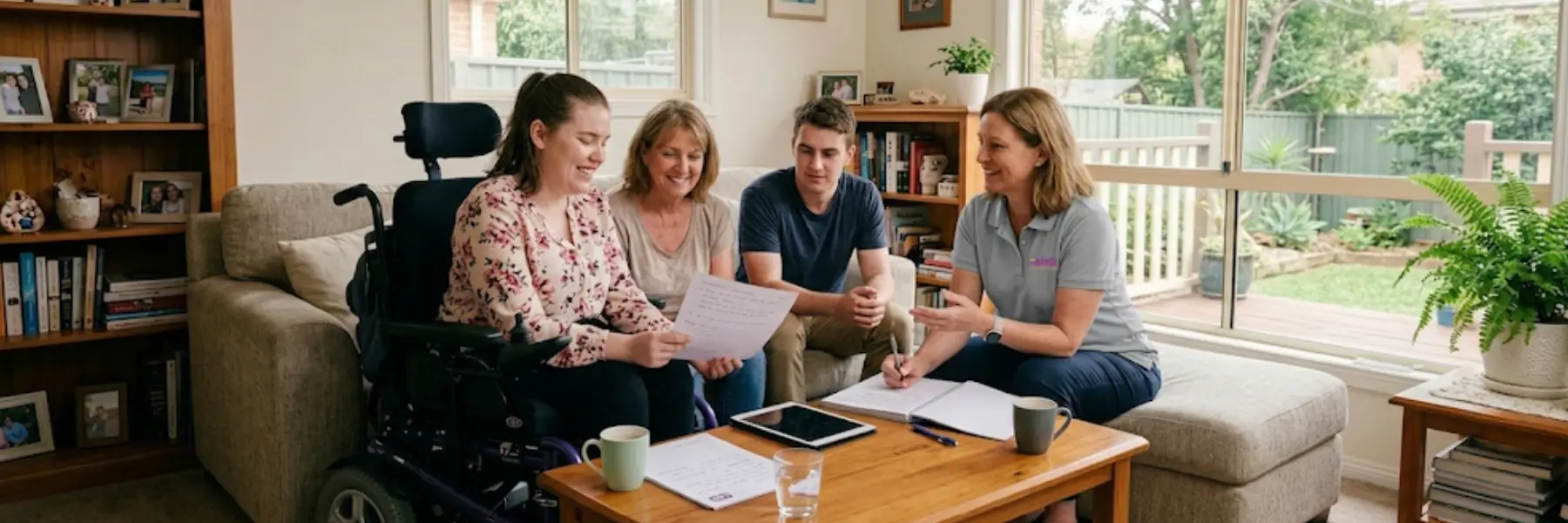
It also helps to mention that checking eligibility is just a conversation, not a commitment. Looking into NDIS planning doesn’t lock anyone in. And if they’re open to it, offer to come along when they first speak to a provider. Having a familiar face during early NDIS planning can make a real difference to how confident the process feels.
Support coordination through ADCS can also help your loved one understand their options and connect with the right services from the start.
What Happens After Your Loved One Agrees to Explore the NDIS?
| Once your loved one is open to the idea, the first step is checking eligibility and submitting an access request to the NDIA. If approved, they’ll be invited to a planning meeting where they discuss their goals, daily needs, and how they’d like their NDIS funding managed. |
The planning meeting is where the real shape of the NDIS plan takes form. It typically runs for around one to two hours and can take place in person, by phone, or via video call. The planner will ask about daily life, longer-term goals, and what support the participant currently has around them.
According to the NDIS, there are three options for managing an approved plan: self-management, NDIA-management, and plan-management. Each option comes with different levels of flexibility and administrative responsibility.
For more detail on what to prepare, see the official guide on how to prepare for your NDIS planning meeting.
Participants can bring a family member, a friend, or a support coordinator to their planning meeting. Having someone there who knows them well can help make sure their goals are communicated clearly and that nothing important gets left out.
How Does NDIS Plan Management Make the Process Less Stressful?
| With NDIS plan management, a registered plan manager handles invoices, payments, and budget tracking on your loved one’s behalf. This removes the administrative load while still giving the participant full choice over which providers they work with, including both registered and unregistered providers. |
Plan management is often the option families prefer when their loved one is new to the NDIS or simply doesn’t want to manage paperwork alongside everything else. The NDIS confirms that a plan manager keeps records of supports, pays providers directly from the plan, and provides regular budget reports so the participant always knows where their funds stand.
Importantly, NDIS plan management is funded through a separate line in the participant’s plan. It doesn’t reduce the budget available for other supports. And if plan management wasn’t included when the original plan was approved, your loved one can request it at any time by contacting their NDIA representative.
For families supporting a loved one through this stage, ADCS plan management services are one option worth exploring. An experienced provider who understands daily living support and community access can make a real difference in how smoothly the transition goes.
Frequently Asked Questions
What living support options are available once an NDIS plan is approved?
Once an NDIS plan is approved and active, participants can access a wide range of funded supports depending on their goals. These include daily living assistance, community participation activities, home and living support, therapy services, and accommodation options such as Supported Independent Living (SIL). The specific supports available depend on what the NDIA determines is reasonable and necessary for each individual.
Can a family member attend the NDIS planning meeting?
Yes. Participants can bring a family member, friend, or support coordinator to their NDIS planning meeting. Having someone familiar in the room can help the participant communicate their goals more clearly and feel more at ease with the process. It’s worth confirming this arrangement with the planner or LAC before the meeting date.
What if my loved one refuses to consider NDIS help?
Resistance is very common, particularly in the early stages. Focus the conversation on specific activities your loved one wants to do more of, rather than on limitations. Framing NDIS as a tool for independence and goal achievement tends to land better than framing it as support for what they can no longer manage. You rarely resolve this in a single conversation. Give it time.
What is the difference between NDIS planning and NDIS plan management?
NDIS planning is the process of creating the NDIS plan, including setting goals and deciding what supports will be funded. NDIS plan management is how someone handles the financial administration of an approved plan, such as paying invoices and tracking the budget. A plan manager takes on that administrative work so the participant can focus on the supports themselves.
How often is an NDIS plan reviewed?
NDIS plans are typically reviewed every 12 to 24 months, depending on the participant’s circumstances. If a participant’s needs change significantly before the scheduled review date, they can request a plan reassessment through their NDIA contact. Plan management arrangements can also be changed during the plan period if the participant decides they want a different management option.
Start the Conversation With the Right Support Behind You
One clear starting point is all it takes to get the process moving. The NDIS conversation doesn’t need to be perfect. It just needs to happen.
Australian Disability Care Services (ADCS) is a registered NDIS provider in Greater Sydney, offering plan management, support coordination, daily living support, and accommodation options including Supported Independent Living (SIL). Call ADCS at 1300 575 740 or email info@adcs.au to talk through your loved one’s options and start planning support that fits their life.
