

Most NDIS participants in Sydney are either underclaiming, overpaying, or both. And they have no idea.
It is not their fault. The Assistance with Daily Life category alone has dozens of line items, four different rate tiers depending on the time of day, and an entirely separate funding pathway if you happen to need support on a Sunday. Add in the confusion between SIL and in-home support, and it is easy to see why so many families end up guessing.
The NDIS supports over 692,000 Australians as of December 2024, per the NDIS Quarterly Report, with a significant number of those participants right across Greater Sydney. If NDIS Daily Living Support in Sydney is part of your plan, or should be, here is exactly what it covers, what it costs in 2025-26, and how to stop leaving funding unused.
What “Assistance with Daily Life” Actually Covers
“Assistance with Daily Life” is a formal NDIS budget category under Core Supports. It funds the practical, hands-on help that allows a person with disability to manage their day. Think of it as support for the tasks most of us do without a second thought.
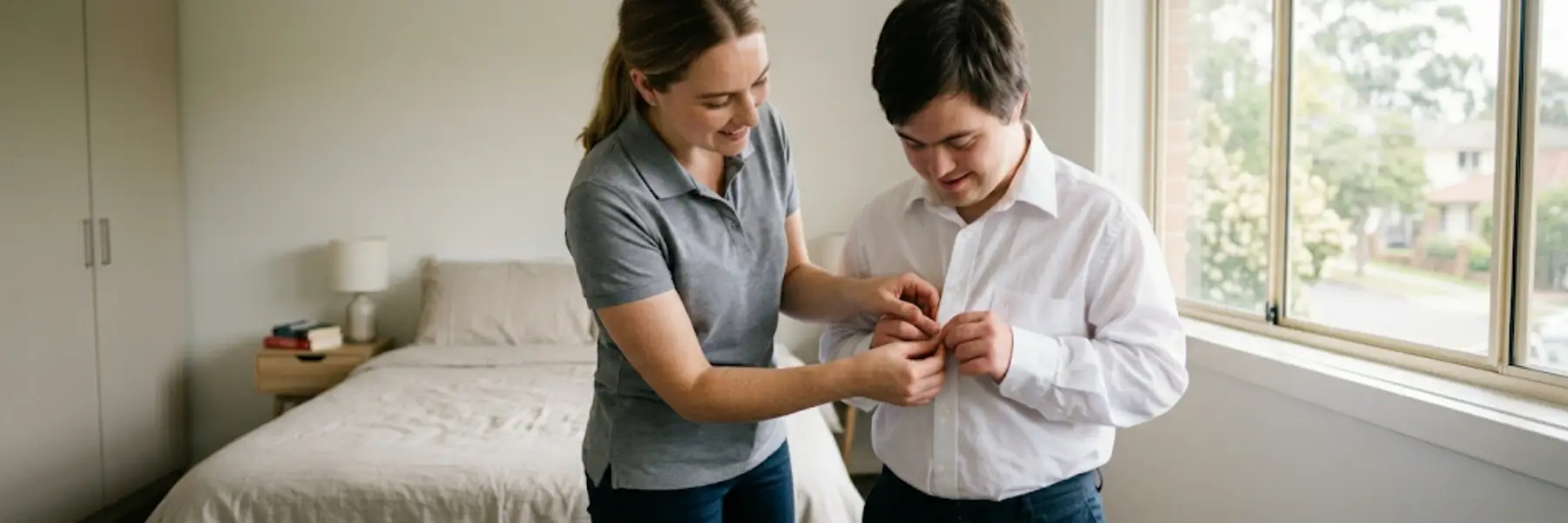
Covered supports typically include:
- Personal care and grooming: Showering, dressing, oral hygiene, shaving, and applying skin care or medication as directed.
- Morning and evening routines: Getting up and ready for the day or winding down safely at night.
- Meal preparation: Planning, cooking, and sometimes feeding support, depending on the participant’s needs.
- Household tasks: Cleaning, laundry, washing up, and maintaining a safe living environment.
- Overnight support: Assistance through the night for participants who need active care or a support worker to be present (known as a sleepover shift).
- Assistance with daily life skills: Guided practice for participants building independence in any of the above areas.
What It Does NOT Cover
This is where many families run into surprises. The NDIS will not fund:
- Ordinary living costs such as groceries, utility bills, or rent.
- Tasks that are not related to the participant’s disability.
- Support for family members or housemates who do not have NDIS plans.
- Home modifications or assistive technology (these fall under separate budget categories).
If you are unsure whether a specific task qualifies, our team at ADCS can help you work through it. You can also visit our NDIS Daily Living Support Sydney page for a fuller overview of what we provide.
2025-26 Pricing: What You Need to Know for Your Weekly Budget
The NDIS Pricing Arrangements and Price Limits 2025-26 (effective 1 July 2025) introduced a 3.95% increase to standard support worker rates. Here is what that looks like in practice for Assistance with Daily Life supports:
| Time Period | Maximum Rate (Standard) |
| Weekday daytime (before 8pm) | $70.23 per hour |
| Weekday evening (after 8pm) | ~$77.25 per hour (10% loading) |
| Saturday | $98.32 per hour |
| Sunday | $126.42 per hour |
| Public holiday | Higher again (approx. 170% of weekday) |
Source: NDIS Pricing Arrangements and Price Limits 2025-26, v1.1
These are maximum rates. Providers cannot charge above them for NDIA-managed or plan-managed participants using registered providers, but rates below the cap are entirely negotiable if you are self-managed or plan-managed.
What this means for your weekly budget in plain language:
Say you need 10 hours of support per week. If all of those hours fall on weekdays during the day, you are looking at approximately $702 per week. Shift just two of those hours to a Sunday and your bill climbs by over $100, even for the same support. Scheduling non-urgent tasks on weekdays where possible is one of the most straightforward ways to stretch your plan further.
Overnight sleepover shifts work slightly differently. There is a flat rate for the shift (covering up to two hours of active support), with additional hourly rates applying if active assistance is needed beyond that threshold.
SIL vs. In-Home Daily Living: Which One Is Right for You? 
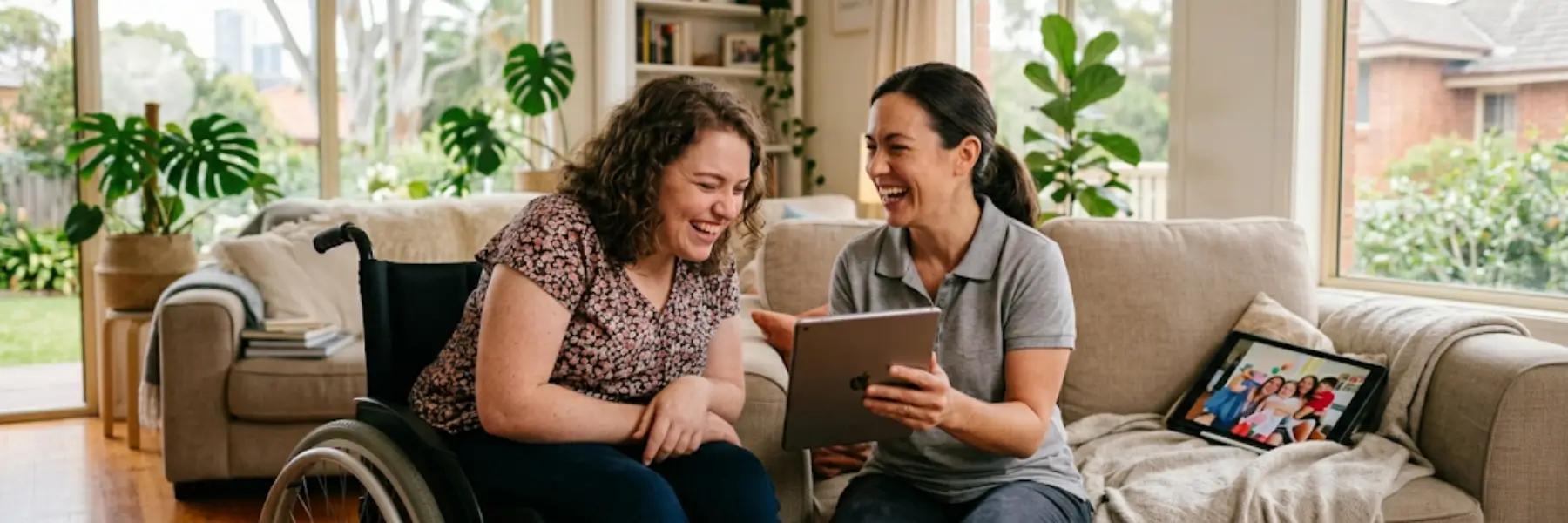
This is one of the most common points of confusion for participants and their families.
Supported Independent Living (SIL) is funded NDIS support for people who live in shared or specialised housing and need ongoing, often 24-hour, assistance. SIL is about the level of support you receive wherever you live, not the building itself. It is usually suited to people with higher and more complex support needs.
In-home daily living support, by contrast, is for people living in their own home (rented or owned) who need help with specific tasks, for a defined number of hours per week. You do not need to live in a group setting or shared arrangement to access it.
A quick way to tell them apart: if you are living independently and just need a support worker to come in each morning, help with dinner three times a week, and do the laundry on Fridays, that is in-home daily living support. If you need round-the-clock assistance and are considering shared accommodation, SIL is likely more relevant to your situation.
If SIL sounds like the right fit, our NDIS Home and Living Support page covers eligibility in more detail and explains how ADCS approaches supported living arrangements across Greater Sydney.
How to Request Daily Living Support in Your NDIS Plan
Getting the right language into your plan from the beginning saves a lot of frustration later. Here is a step-by-step approach for your next planning meeting with your NDIA planner or Local Area Coordinator (LAC):
- List specific tasks, not general needs. Instead of saying “I need help at home,” say “I need support with showering, dressing, and preparing breakfast on weekdays, and meal preparation three evenings per week.”
- Specify hours and frequency. “Approximately 10 hours per week” gives your planner something concrete to work with.
- Mention time-of-day requirements. If you need evening support, say so. This affects both the type of support funded and the pricing applied.
- Reference your functional capacity assessment. If you have had an occupational therapy assessment, bring it. It provides evidence for the supports you are requesting.
- Ask for flexibility in your Core Supports budget. Core Supports are generally flexible, meaning you can move funding between sub-categories (daily living, transport, consumables, and social participation) without a plan amendment.
If you need support navigating this process, our NDIS Home and Living Support team works with participants across Greater Sydney every day.
Signs Your Current Daily Living Support Is Not Working
Sometimes the problem is not the plan. It is the provider. Here are some red flags that your current daily living support arrangement may need a rethink:
- Support workers frequently arrive late, cancel at short notice, or are rotated so often you never see the same person twice.
- You feel rushed through your morning routine and do not have time to do things your way.
- Your goals are never discussed, and your plan reviews feel like paperwork exercises.
- You are not sure what you are being charged or why.
- The provider cannot explain what is covered by your plan and what is not.
Changing providers is your right under the NDIS. You do not need to justify the decision, and you are not locked in. At ADCS, we welcome participants who want a fresh start and a provider that genuinely takes the time to understand their goals.
Ready to Get More From Your NDIS Daily Living Support in Sydney?
Whether you are planning for the first time or reviewing an existing arrangement, getting the right support in place makes a real difference to daily life. ADCS serves participants across the Greater Sydney region, from the Inner West to the Hills District and beyond.

Visit our Disability Support Services page to learn more, or get in touch with our team to discuss your situation directly.
Frequently Asked Questions
Can my NDIS daily living support fund domestic cleaning?
Yes. Household tasks including cleaning and laundry are funded under Assistance with Daily Life, provided the need is related to your disability and is included in your plan.
What is the difference between Assistance with Daily Life and Improved Daily Living?
Assistance with Daily Life funds hands-on support workers. Improved Daily Living funds therapy and skill development (such as occupational therapy). They sit in different budget categories and cannot be interchanged.
Can I use my daily living support budget on weekends?
Yes, but weekend rates are significantly higher. Saturday support is approximately 40% more expensive than a standard weekday rate, and Sunday support is approximately 80% more expensive. Plan your roster accordingly to maximise your hours.
