

The NDIS is going through several changes between now and April 2027, and it can be difficult to keep track of what is changing, when it is happening and whether it actually affects your plan. These reforms are outlined across official NDIA and Department of Health, Disability and Ageing updates.
For participants in Sydney, the most useful approach is to look at the NDIS changes in 2026 as a timeline rather than trying to understand every reform at once. Some changes have already started. Others are scheduled for later in 2026 or early 2027, while some details are still being finalised.
Here are seven changes worth knowing about and what they could mean for your NDIS supports.
1. July 2026: SIL provider registration is now mandatory
Supported Independent Living, or SIL, is one of the areas where the NDIS has introduced significant changes this year.
From 1 July 2026, providers delivering SIL must be registered, although existing unregistered SIL providers have a transition period to apply for registration.
This matters if you currently receive SIL or are considering moving into a SIL arrangement.
The important point is that your NDIS plan and funding do not automatically change simply because your SIL provider has to meet new registration requirements.

What you should do is check your provider’s position.
Ask:
- Is my SIL provider registered?
- If not, have they applied for registration?
- Will my current supports continue during the transition?
- Who should I contact if there is a problem with my SIL arrangement?
- Does my service agreement still accurately reflect my supports?
There are also new claiming requirements for SIL. From 1 July 2026, SIL supports delivered after that date use the new support item code 0138.
Existing unregistered SIL providers that were delivering supports before 1 July have until 1 October 2026 to apply for registration if they want to continue providing SIL after that date.
For participants, this is less about learning every new claim code and more about making sure your provider is prepared.
ADCS provides SIL services across Greater Sydney and can help participants explore supported living options based on their individual needs.
2. October 2026: Some community participation budgets will be reset
One of the more significant NDIS reforms in 2026 involves social, civic and community participation funding.
From 1 October 2026, the Government plans to begin resetting these budgets as participants’ plans are reassessed or renewed.
The changes are intended to bring spending levels closer to earlier benchmarks. Social, civic and community participation budgets are expected to be reduced by 50 per cent on average, while capacity building daily activity budgets are expected to reduce by 10 per cent.
That does not mean every participant will suddenly lose exactly 50 per cent of their current funding.
The change is expected to happen progressively as plans are renewed or reassessed, and the practical impact will depend on your individual circumstances and existing budget.
This is why it is worth understanding what your community participation funding is currently being used for.
For example, you might use support to:
- Attend community activities
- Develop social skills
- Build confidence using public transport
- Participate in recreational activities
- Practise everyday skills outside the home
- Build greater independence in your local community
ADCS’s NDIS Community Participation Sydney service focuses on helping participants take part in social and community activities that align with their goals and preferences.
The key is not to wait until your next plan change to think about how your current supports are working.
Keep records of the activities you participate in, the goals they support and the progress you are making.
That information can be useful when discussing your needs with your support coordinator or preparing for a plan review.
3. December 2026: The 90-day claim window begins
Another important change is coming to NDIS claims.
From 1 December 2026, the time available to make a claim for supports will be reduced from two years to 90 days after the support is delivered.
This is particularly important for participants who self-manage their funding and for anyone using a plan manager.
The practical lesson is simple:
Do not leave invoices sitting around for months.
A provider may be responsible for submitting the claim, but participants and plan managers also have a role in making sure payments and records are kept organised.
You can make this easier by:
- Checking invoices regularly
- Querying incorrect invoices promptly
- Keeping copies of receipts and relevant records
- Making sure your plan manager has the information they need
- Asking providers to invoice promptly after delivering supports
The change is part of the broader reforms aimed at improving the visibility and integrity of NDIS payments. The Department of Health, Disability and Ageing lists 1 December 2026 as the commencement date for the shorter claim period.
If you use plan management, this is another reason to choose a provider that communicates clearly and keeps your financial administration organised.
ADCS’s NDIS Plan Management Sydney service includes invoice processing, budget tracking and regular financial statements.
4. February 2027: Plan rollovers will change
Another change to watch is what happens when your current plan reaches its reassessment date.
Under the proposed reforms, a renewed plan will replace the previous plan rather than simply carrying unused funding forward.
This makes it more important to understand your current budget rather than assuming unused funding will always remain available in the next plan.
Before your plan reaches its reassessment date, consider:
- What supports are you currently using?
- Which supports are helping you work towards your goals?
- Are there areas of your plan that are consistently underused?
- Have your circumstances changed?
- Are there supports you need more often?
- What evidence shows the impact of your current supports?
You do not need to spend your funding simply because you have it.
The goal is to make sure your supports reflect your actual needs and that you can explain what is working and what may need to change.
5. February 2027: The way “reasonable and necessary” supports are considered will become clearer
The NDIS is also moving towards clearer criteria for determining which supports should be funded.
For participants, this means it will become increasingly important to understand why a support is needed, not simply what the support is called.
For example, instead of thinking only about needing community access, think about the outcome that support helps you achieve.
Does it help you:
- Attend appointments independently?
- Develop daily living skills?
- Build confidence in the community?
- Maintain relationships?
- Participate in education or employment?
- Work towards greater independence?
Keeping your goals and support needs connected can make conversations with your support coordinator, provider or planner much more productive.
This is where good documentation matters.
Keep notes about changes in your circumstances, progress towards your goals and situations where your existing supports are no longer sufficient.
6. April 2027: The new way of planning arrives
The new planning system is one of the biggest changes on the NDIS changes timeline.
The NDIA is working towards a revised implementation date of 1 April 2027 for the new way of creating participant plans.
The new approach will include a Support Needs Assessment, designed to understand what support a person needs in everyday life.
The assessment will use a customised version of the I-CAN v6 tool alongside other information about a participant’s personal and environmental circumstances.
The aim is to create a planning process that is more consistent and focused on a person’s support needs.
For participants, this means preparing for a planning conversation may look a little different in the future.
Instead of thinking only about your diagnosis or the supports you currently receive, think about your everyday life.
Consider:
- What tasks are difficult without assistance?
- How much support do you need?
- How often do you need that support?
- What happens when support is unavailable?
- What are you trying to achieve?
- What environmental factors affect your independence?
- Which supports are helping you build skills or maintain your daily life?
The new planning approach is being introduced progressively, so not every participant will experience the changes at exactly the same time.
The NDIA has also been testing the Support Needs Assessment with participants as it prepares for implementation.
7. Your NDIS plan still needs to reflect your life, not just the system

Amid all these NDIS changes in 2026, it can be easy to become focused on dates, rules and funding categories.
But there is one practical point that remains important: your NDIS plan should relate to your individual circumstances and goals.
Whether you receive SIL, community participation, daily living support, therapy or plan management, it is worth regularly asking:
Is this support helping me achieve what I want from my life?
That question can help you make better decisions even as the NDIS changes around you.
Your choice and control also remain important parts of the participant experience. You can ask questions, seek information about decisions affecting your plan and use the available review pathways when you disagree with an NDIS decision.
What stays the same?
With so many NDIS reforms in 2026, it is easy to assume that everything is changing.
That is not the case.
Your individual circumstances still matter, and your supports should continue to be considered in the context of your disability-related needs and goals.
Some practical principles remain central:
- Your goals matter.
- Your support needs matter.
- You can ask questions about your plan.
- You can work with providers that suit your needs.
- You can seek help understanding NDIS processes.
- You can raise concerns when something does not seem right.
- You can access available review processes when you disagree with a decision.
The important thing is to understand which change applies to you rather than assuming every reform will affect your plan immediately.
Where can you get help navigating these changes in Sydney?
Keeping track of the NDIS can feel like a job in itself.
You do not have to work through every change alone.
A support coordinator can help you understand your plan, connect with suitable providers, monitor your supports and prepare for plan reviews. ADCS NDIS Support Coordination provides this type of practical assistance for participants across Greater Sydney.
If you need help with the financial side of your plan, ADCS NDIS Plan Management can assist with invoices, budget tracking and financial statements.
For participants looking at community participation, ADCS Community Participation offers support designed around individual goals and interests.
You can also read ADCS’s practical guide, What Activities Can My NDIS Plan Pay For in Sydney?, for more ideas about using community participation supports.
For home and living decisions, ADCS’s SIL, SDA or ILO guide for Greater Sydney is another useful resource.
A simple NDIS changes checklist
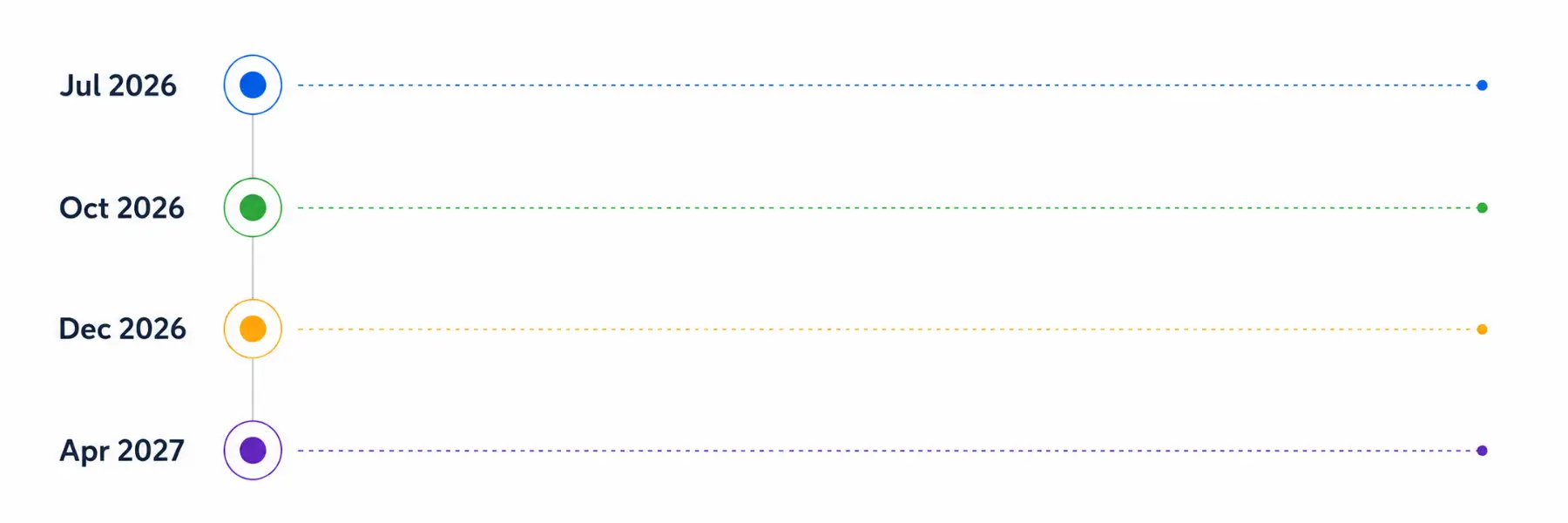
You do not need to memorise every reform.
For now, keep this checklist handy:
- July 2026: Check your SIL provider’s registration position.
- October 2026: Review how your community participation and capacity building supports are being used.
- December 2026: Make sure invoices and claims are submitted within the new timeframe.
- February 2027: Prepare for changes to plan renewals and funding arrangements.
- April 2027: Be ready for the new planning approach if it applies to you.
Most importantly, keep your focus on your actual support needs.
Need help understanding the NDIS changes?
The NDIS is changing, but you do not have to navigate every update on your own. ADCS supports participants across Greater Sydney with plan management, support coordination, SIL, community participation and other disability support services.
Speak with ADCS to discuss your current supports and how you can prepare for the changes ahead.
